When does a balloon flight go ahead or not? Weather & wind

A balloon flight goes ahead when wind, visibility and general weather stability are sufficiently safe — specifically a wind speed between 5 and 15 km/h at ground level (above 18-20 km/h a landing becomes too rough), at least 5 kilometres of visibility, and no thunderstorms within 50 to 100 km. Pilots decide on the day itself based on the latest weather models: usually around 15:00 for evening flights, or the evening before around 18:00 for morning flights. At Ballonnetjevaren.be we reschedule free of charge in bad weather — your ticket or gift voucher stays valid and you never lose money on a cancelled flight; the flight simply moves to a new date. Summer isn't necessarily the best season; good ballooning weather exists in every season, provided conditions on the day itself are favourable.
In this article
- • When doesn’t a balloon flight go ahead? (Wind force, visibility & weather)
- • Ideal balloon flight weather: why flying in the evening and wind force limits
- • Who decides whether a balloon flight goes ahead?
- • What if your balloon flight is cancelled due to weather?
- • How can you recognise good ballooning weather yourself?
- • When does a balloon flight go ahead for groups, couples or companies
- • Why a strict decision ultimately feels better
- • How to plan smartly without unnecessary stress
You’re looking forward to your flight, the basket is already almost ready in your imagination, and then comes the question everyone asks: when does a balloon flight go ahead? The honest answer is simple and reassuring at the same time: only if conditions are safe and pleasant enough. That’s exactly where the added value of a professionally organised balloon flight lies. You don’t just board for a ride, but for an experience that’s right from preparation to landing.
When doesn’t a balloon flight go ahead? (Wind force, visibility & weather)
Many people think a balloon flight only depends on sun or rain. In reality it’s broader than that. A clear evening can look beautiful from the ground, yet still be unsuitable for take-off. Conversely, a slightly cloudy morning can be perfectly flyable.
The most important factor is wind and wind force for ballooning. For safe and ideal weather for a balloon flight, ground wind should be a maximum of 15 to 18 km/h. Not only does wind speed at ground level matter, but also what happens at different altitudes. A balloon lets itself be carried by air currents. That’s why a pilot needs to be able to properly assess in advance whether the flight will proceed safely, calmly and controllably. Too much wind makes setting up, taking off and especially landing less comfortable and less predictable.
In addition, precipitation, visibility and weather development play a big role. Fog, thunderstorm risk or showery conditions can be reasons not to let a flight go ahead. That’s not a disappointing formality, but a deliberate safety choice. Anyone choosing quality actually wants strict assessment.
Ideal balloon flight weather: why flying in the evening and wind force limits
Balloon flights usually take place at the calmest moments of the day. That’s not a coincidence. Shortly after sunrise and a few hours before sunset, the atmosphere is often more stable. The wind is usually calmer then, which makes the whole experience more pleasant.
During the day, especially on warmer days, the ground warming up more often creates turbulent air currents. You might not notice that immediately on the street, but in the air it makes a big difference. That’s why balloon flights rarely depart in the middle of the day.
For passengers, that’s actually an extra bonus. A morning flight gives you a quiet landscape slowly waking up. An evening flight treats you to warm light, long shadows, and that typical feeling that an ordinary day suddenly becomes something special. Safety and experience come together beautifully here.
Why summer isn’t always better
Summer seems like the logical season to many people, but good ballooning weather exists in every season. A crisp autumn evening can be ideal. A clear winter morning too. In spring, the views are often magnificent, though the weather can change faster.
So it depends less on the calendar than on the concrete conditions of the day itself. Anyone who plans flexibly usually increases their chances of a successful flight. That’s also why a gift voucher or a booking with multiple possible dates often works so well.
Who decides whether a balloon flight goes ahead?
That decision always lies with the pilot or the organisation, never with wishful thinking. That’s a good sign. A professional ballooning specialist bases this on experience, current weather data, and local knowledge of the region where take-off happens.
This looks not only at the departure point, but also at the expected flight area and possible landing zones. After all, a balloon follows the wind. The question therefore isn’t just whether you can depart safely, but also whether you’ll later be able to land safely and responsibly.
At an experienced organisation, that assessment is made carefully. Sometimes the answer is quickly clear. Sometimes they wait until closer to departure time because weather systems can still shift. That requires patience, but it’s exactly that thoroughness that builds trust.
When do you hear back?
In practice you usually hear on the day of the flight whether it’s going ahead: around 15:00 for evening flights, or the evening before around 18:00 for morning flights. The pilots then consult together based on the latest weather models — only once everyone feels 100% comfortable with the conditions does the flight go ahead. Specifically we take into account, among other things, a wind speed between 5 and 15 km/h at ground level (above 18-20 km/h a landing becomes too rough), at least 5 kilometres of visibility, and no thunderstorms within a radius of 50 to 100 km. That might seem late, but is often necessary. Weather models give a good indication, but the most reliable decision only follows once conditions are sufficiently clear.
That doesn’t mean you’re kept in uncertainty for no reason. On the contrary. The goal is to communicate as accurately as possible. Confirming too early and then having to cancel later helps no one. A professional approach chooses clarity at the right moment.
What if your balloon flight is cancelled due to weather?
A weather cancellation is annoying, especially if you were looking forward to it or had something to celebrate. Yet in the world of ballooning this is quite normal. It says nothing negative about your booking or the organisation. It mainly says that safety takes priority over speed. We work with free rescheduling in bad weather: your ticket or gift voucher remains fully valid and you never lose money or an expired voucher due to a cancelled flight.
In most cases, your flight is simply moved to a new date. That’s also the reason ballooning works so well as a gift or planned experience: the experience stays preserved, only the moment shifts. For many passengers that actually increases trust afterward. You know that no risk is being taken to meet a schedule at all costs.
Anyone booking for an anniversary, birthday or surprise does well to build in some margin. If the exact date is sacred, the weather can sometimes get in the way. If the experience is what matters most, an alternative date is usually found quickly.
How can you recognise good ballooning weather yourself?
You don’t need to be a meteorologist to make a first assessment. Calm weather, no rain, good visibility and a peaceful atmosphere at ground level are often positive signals. Yet that’s only part of the story.
What you see from your terrace isn’t the same as what a pilot needs to assess. Wind at altitude, changing currents and local differences are often invisible to passengers. That’s why it’s wise not to draw your own conclusions if the sky looks nice. A calm blue sky feels promising, but the professional check remains decisive.
Conversely, light cloud cover doesn’t need to be a problem. As long as wind, visibility and general stability are good, that can actually produce a beautiful flight. The most beautiful photos don’t always come from a perfectly blue sky.
When does a balloon flight go ahead for groups, couples or companies
Whether you’re booking as two, bringing a family, or planning a corporate experience, the basic conditions stay the same. Safety makes no distinction between a romantic flight and a B2B event. The impact of planning is different, though.
For couples and gift experiences, it’s often about emotion. You want that moment to feel right. It helps then to see ballooning as a premium experience that respects the weather, not as a fixed time slot like a restaurant reservation. That’s exactly what makes it special. You wait for the right moment and get an unforgettable flight in return.
For companies, predictability is often more important. Even then, flexibility remains necessary. A professional organiser thinks along with you about alternative dates, clear communication and a well-cared-for overall experience as soon as conditions are good. That makes the difference between just any activity and an experience that truly leaves an impression.
Why a strict decision ultimately feels better
No one enjoys a flight being postponed. Yet a careful decision almost always feels better afterward than a doubtful start. In a hot air balloon, everything revolves around calm, trust and enjoyment. That only succeeds if you know every detail was correctly assessed beforehand.
That’s also where experience weighs heavily. An organisation with years of expertise knows when waiting is wise and when conditions are exactly perfect. You don’t always see that knowledge at first glance, but you notice it in everything: in the briefing, in the communication, and in the safe feeling the moment the balloon lifts off the ground.
At Yves Lannoy Ballooning, that approach is central. Not departing just to depart, but choosing the right moment where safety, comfort and experience come together. That’s exactly what makes a balloon flight a premium experience.
How to plan smartly without unnecessary stress
Anyone booking a balloon flight does well to plan with both anticipation and flexibility. Choose a period where you have some margin, take possible rescheduling into account, and see the weather decision as part of the quality of the experience. You’ll then depart mentally with more calm.
It also helps not to pin your flight to one single date, but to the moment itself. Once conditions are good, everything falls into place: the inflating of the balloon, the silent ascent, the view that keeps widening, and that special landing somewhere in the landscape. That’s ultimately what you’re doing it for.
A balloon flight can’t be forced, and that’s exactly why it stays so special. When the sky cooperates, it doesn’t feel like just an outing, but like an experience that stays with you for a long time.
Yves Lannoy
CEO & Chief Pilot at Ballonnetjevaren.be. Chairman of the Royal Belgian Balloon Federation (KBBF) and Vice President of the European Balloon Federation (EBF). With over 30 years of experience and more than 3,000 flights, safety and genuine passion always come first.
Related Knowledge Base Articles
Learn more about hot air ballooning in Belgium.

Sint-Niklaas balloon festival: the Vredefeesten explained
The Sint-Niklaas balloon festival is part of the Vredefeesten, held in early September on the Grote Markt. What to see, and how to fly yourself.
Read article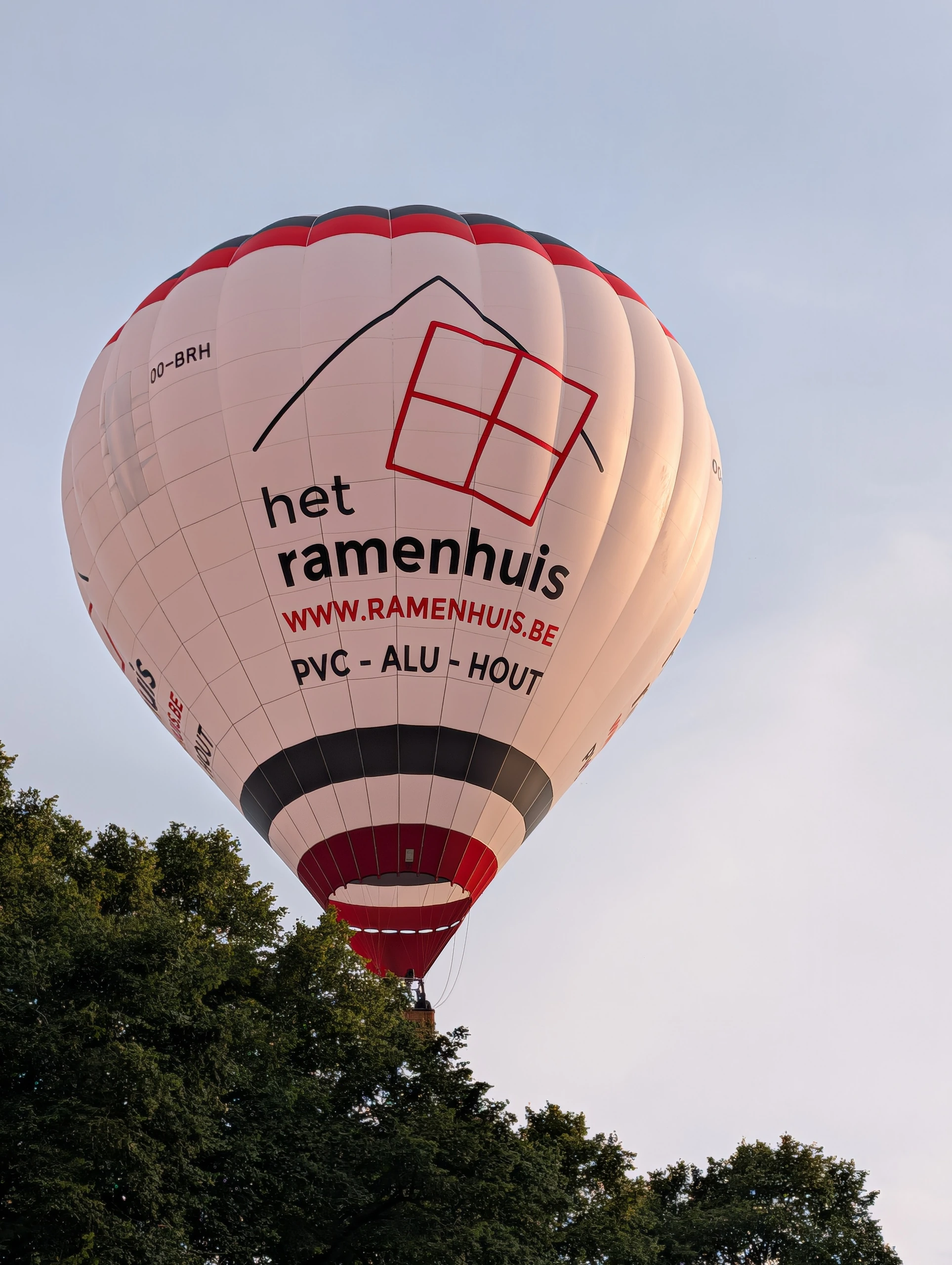
Balloon register: what does OO on a hot air balloon mean?
Every Belgian hot air balloon is in the aircraft register with an OO registration. How to recognise the balloon above your village, and what the letters say.
Read article
The Montgolfier brothers: the first balloon flight
In 1783 the Montgolfier brothers launched the first hot air balloon. This is how ballooning began, and how the same principle still works today.
Read article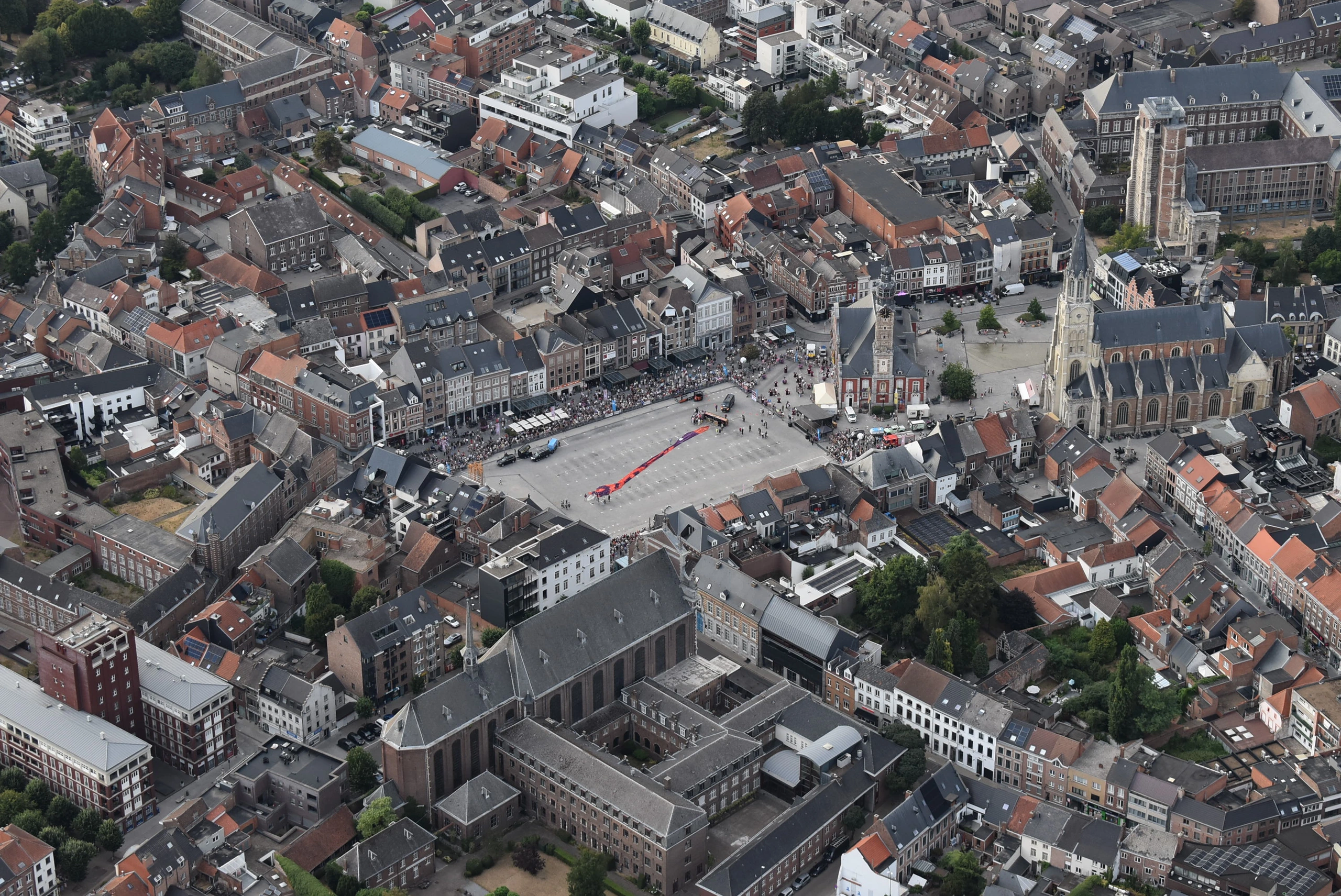
Choosing a hot air balloon experience for anniversary celebrants
Choosing a balloon flight as an anniversary gift? Discover which format suits a wedding anniversary, corporate anniversary, or personal milestone.
Read articleReady to discover Flanders from above?
Book a shared flight or an exclusive private flight in Campine, Limburg or Hageland, with free rescheduling in bad weather.