Can I go ballooning if I'm pregnant?

No, ballooning during pregnancy is not permitted at Ballonnetjevaren.be or at any EASA-certified professional ballooning company, regardless of the trimester of pregnancy. Although the flight itself is particularly serene and vibration-free at 1,000 metres altitude, a landing remains weather-dependent: if ground wind suddenly picks up, the basket can bounce or tip over. This abrupt physical impact can carry risks for mother and foetus. For that reason, both gynaecologists and the Royal Belgian Balloon Federation (KBBF) set a strict flying ban for pregnant passengers. Do you have a ticket or gift voucher? No worries: let us know before your voucher's expiry date and we'll extend it free of charge. If we hear nothing, the voucher expires.
Did you receive a gift voucher for a balloon flight or were you planning to book a romantic flight, but are you now expecting? First of all: huge congratulations on this special milestone!
Wondering: can you take a balloon flight if you’re pregnant (or what about ballooning while pregnant)? At Ballonnetjevaren.be we regularly receive questions from expectant mothers and concerned partners about the safety of ballooning during pregnancy. As an EASA-certified aviation operator, we apply a clear and strict safety policy that’s fully in line with the medical advice of gynaecologists and the guidelines of the Royal Belgian Balloon Federation (KBBF).
Flying during pregnancy is not permitted
At Ballonnetjevaren.be we do not take pregnant passengers on board. This applies without exception to every stage of pregnancy:
- First trimester (weeks 1 through 12): the crucial phase of organ formation and embryonic implantation, in which the risk of spontaneous complications is statistically highest.
- Second trimester (weeks 13 through 27): although mothers often feel their fittest, the risk of abrupt abdominal impact at landing remains irresponsible.
- Third trimester (week 28 until delivery): increased vulnerability, more limited mobility to take the required landing position, and the risk of premature contractions.
Even with a medical certificate from your treating physician, our head pilot Yves Lannoy cannot allow any exception to this safety rule.
Why does this strict ban apply?
A balloon flight in the air is one of the calmest experiences in the world. The balloon moves exactly along with the wind, which means you feel no wind, draft or vibration on board. The risk therefore doesn’t lie in the flight itself, but in the unpredictable dynamics of the landing.
Although over 95% of our landings go feather-soft and standing, wind at ground level can unexpectedly increase or shift during the landing moment. In that case we speak of a “sporty landing”:
- Impact shock: the basket makes contact with the field, bounces a few metres, and slides through the grass to a stop.
- Tipping of the basket: with enough wind, the basket tips over controlled onto its side. Passengers then hang in the special handholds with knees bent against the impact rim.
- Physical pressure on the abdominal wall: during such a landing, passengers may briefly be pressed against each other or against the rim. For an adult this amounts to at most an adrenaline kick, but for an unborn child this carries an unacceptable risk of placental abruption or trauma.
Safety isn’t a marketing term for us but an absolute code of honour: we never take any risk with the health of mother and baby.
When can you fly again after giving birth?
After the birth, you’re very welcome to still experience the silence of the sky — a wonderful moment of relaxation for new parents! We apply the following medical guidelines for this:
- After a natural birth: from a minimum of 6 to 8 weeks after delivery, provided your pelvic floor and physical condition have sufficiently recovered to stand relaxed for an hour.
- After a caesarean section: from a minimum of 10 to 12 weeks, once the deep abdominal muscle and scar tissue have fully healed and your gynaecologist has given the green light for light sporting activities.
What happens to your ticket or gift voucher?
Mind the expiry date of your voucher:
- Free extension: Pregnant? Let us know before your voucher’s expiry date, by email (info@ballonnetjevaren.be) or by phone, and we’ll extend it free of charge. If we hear nothing, the voucher expires: the expiry date is there so you get in touch in time and plan a date.
- Transferability: would you rather pass the voucher on to a family member, friend or colleague? That’s always possible free of charge and without administrative hassle.
- Flexible rescheduling: once you’re ready, simply choose a new date via our online calendar in Campine, Limburg or the Hageland.
Do you have questions about an existing booking? Feel free to contact us — our team will be happy to help you further.
Yves Lannoy
CEO & Chief Pilot at Ballonnetjevaren.be. Chairman of the Royal Belgian Balloon Federation (KBBF) and Vice President of the European Balloon Federation (EBF). With over 30 years of experience and more than 3,000 flights, safety and genuine passion always come first.
Related Knowledge Base Articles
Learn more about hot air ballooning in Belgium.

Hot air balloon flight for wheelchair users and people with disabilities: our door baskets
Taking a balloon flight in a wheelchair or with reduced mobility? Discover our 3 unique baskets with a certified seat. Safe and comfortable!
Read article
Do I need to compare quotes for a hot air balloon flight?
Why you don't need to compare quotes for a hot air balloon flight: transparent all-in rates, EASA licences and no hidden costs.
Read article
Sint-Niklaas balloon festival: the Vredefeesten explained
The Sint-Niklaas balloon festival is part of the Vredefeesten, held in early September on the Grote Markt. What to see, and how to fly yourself.
Read article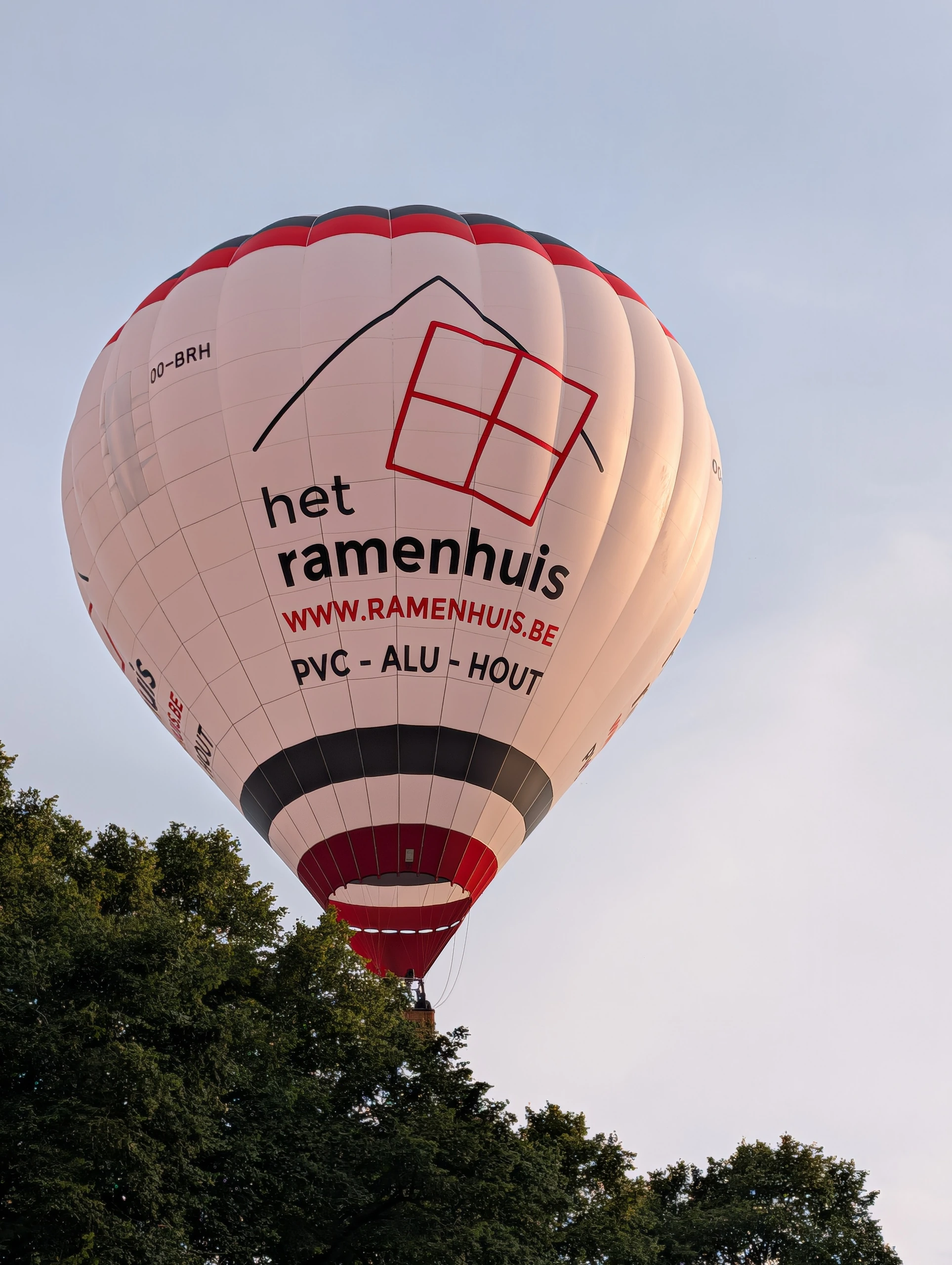
Balloon register: what does OO on a hot air balloon mean?
Every Belgian hot air balloon is in the aircraft register with an OO registration. How to recognise the balloon above your village, and what the letters say.
Read articleReady to discover Flanders from above?
Book a shared flight or an exclusive private flight in Campine, Limburg or Hageland, with free rescheduling in bad weather.