Safety in professional hot air balloon flights

Safety in professional balloon flights, such as at Ballonnetjevaren.be, rests on fixed procedures: an approved commercial operator flies under the supervision of the DGLV and European EASA legislation, with an official "Balloon declaration", and the balloon, burners and baskets receive full maintenance every 100 flight hours or at least annually, by a certified maintenance organisation (CAO). Pilots undergo an annual medical check and complete annual check flights. Flights only take place within strict weather criteria — no thunderstorms within 50 km, no thermal activity, wind speeds between 5 and 15 km/h, and at least 5 kilometres of visibility — and there are always at least two independent burners on board with their own gas supply as backup. In the event of complete heat loss, the envelope itself slows the rate of descent, similar to a parachute. A postponement due to doubtful weather isn't a setback but precisely the sign of a professional operation.
In this article
- • What safety in professional balloon flights really means
- • The role of the pilot and the team
- • Weather and wind - why a cancellation is sometimes the best news
- • Equipment checks and maintenance
- • The passenger briefing isn’t a formality
- • Safety in professional balloon flights and the choice of location
- • What you can do yourself as a passenger
- • Under what regulations does flying take place?
- • Why experience builds trust
- • The experience becomes stronger through professional certainty
Anyone stepping into a hot air balloon for the first time often doesn’t first ask how beautiful the view will be, but how safe it actually is. Rightly so. Safety in professional balloon flights isn’t a detail alongside the experience, but its foundation. Only when preparation, equipment, pilot and weather assessment are all completely in order does that rare feeling of calm arise that makes a balloon flight so special.
A professional balloon flight often feels effortless for passengers. The basket is ready, the balloon is set up, the briefing follows, and before you quite realise it, you’re floating above fields, villages and roads that suddenly take on a different scale. Behind that apparent simplicity lies a tightly organised process in which experience and discipline make the difference.
What safety in professional balloon flights really means
Many people think of safety mainly in terms of the moment of take-off and landing. Those are indeed important phases, but safety begins much earlier. It starts with the decision to fly or not, with the inspection of the equipment, with the choice of take-off location, and with the way passengers are guided.
In professional balloon flights, it’s not about luck or routine. It’s about procedures. An experienced balloon operator works with fixed checks, knows the limits of the equipment, and takes no risks to meet a schedule at all costs. That’s sometimes less exciting for someone eagerly looking forward to their flight, but it’s exactly what builds trust.
There’s also an important difference here from the romantic image many people have of ballooning. A balloon flight is magical, but never casual. It remains aviation. And in aviation, thoroughness isn’t an extra service, but the standard.
The role of the pilot and the team
The pilot determines far more than just the direction of the flight. In a hot air balloon, the pilot is ultimately responsible for the entire operation. That means he or she must not only be technically skilled, but also strong in observation, decision-making and communication.
Experience plays a major role here. A pilot with years of practical knowledge reads weather conditions differently, recognises changes in wind more quickly, and knows better how to prepare for a landing under varying circumstances. You don’t always notice that directly as a passenger, but you do feel it in the calm and clarity on board.
The ground team is also more important than many people think. They help with preparation, follow the flight, support the landing, and ensure everything proceeds with the same control on the ground as in the air. Professional balloon flights are therefore not a solo act by one person, but teamwork.
Weather and wind - why a cancellation is sometimes the best news
Anyone booking a balloon flight naturally hopes everything goes according to plan. Yet a postponement or cancellation is sometimes the strongest proof that you’re dealing with a professional operation. Ballooning is strongly weather-dependent, especially on wind, thermal activity, visibility and chances of precipitation.
A hot air balloon has no steering like a car or an airplane. The balloon moves with the wind. That’s why a pilot must not only look at whether the weather seems pleasant, but mainly whether it’s safe and predictable enough for the whole flight. Calm conditions in the early morning or toward evening are often ideal. In the middle of the day, warming air currents can create more turbulence instead.
That’s also a matter of managing expectations. A professional operator doesn’t promise that every scheduled flight will go ahead. They promise only to fly when conditions are responsible. For passengers that can sometimes require patience, but it’s exactly that caution that distinguishes quality from improvisation.
Equipment checks and maintenance
Anyone thinking about safety in professional balloon flights shouldn’t forget the equipment. The balloon, burners, gas installation, basket and all accessories need to be properly maintained and checked. That doesn’t happen once, but continuously.
Before every flight there are fixed checks. Is the balloon fabric in order, do the burners function as they should, are the connections secure, is the basket ready for use, and is all the equipment present? In addition, there are periodic inspections and maintenance moments that are part of professional operation.
For passengers, this doesn’t need to become a technical lesson. What matters is that a reliable organiser works transparently and leaves nothing to chance. You don’t need to be an expert to feel the difference between an operation that quickly arranges something and an operation that works with routine, precision and care.
The passenger briefing isn’t a formality
Just before take-off, passengers receive instructions. Sometimes people listen a bit too relaxedly, thinking it’ll probably be fine. Yet that briefing is an essential part of safety.
It explains how you board, how you stay comfortably and safely standing during the flight, and especially how to prepare for landing. A balloon landing often goes gently, but depending on wind and terrain can also feel firmer. Anyone who knows exactly what posture is expected helps contribute to a safe outcome.
Here too you see the difference between a simple outing and a professional aviation experience. Good guidance removes uncertainty. It doesn’t make the experience more exciting through risk, but more beautiful through trust.
Safety in professional balloon flights and the choice of location
Not every open space is suitable for take-off or landing. The choice of location is a trade of its own. Wind direction, space, obstacles, terrain and accessibility for the chase team all need to be taken into account.
In Flanders and the rest of Belgium, that often requires extra attention. The landscape is varied and densely used. There are fields, residential zones, rows of trees, roads and power lines. An experienced balloon team learns to read that landscape. That makes regional knowledge particularly valuable. Knowing where one can safely depart and how to approach different zones increases the reliability of the whole flight.
That’s also why local experience isn’t an optional bonus. It has a direct impact on comfort, timing and safety. A provider with years of practice in the region brings more than just a balloon. They bring insight.
What you can do yourself as a passenger
Professional guidance removes a lot of worry, but as a passenger you can also contribute to a safe flight. That starts with simple things: wear sturdy, closed shoes, follow instructions immediately, and report relevant medical or physical limitations beforehand if they could affect boarding or landing.
It also helps to start your flight with realistic expectations. A hot air balloon is not an attraction with a fixed route and exact schedule. It’s a nature-bound experience. That’s exactly why it feels so unique. Anyone who understands that experiences less tension and more confidence.
For families or gift buyers, that’s an important nuance. A balloon flight is a premium experience, but not a product of assembly-line logic. The quality lies precisely in the professional considerations behind the scenes.
Under what regulations does flying take place?
“Professional” isn’t an empty term at an approved commercial operator: such an operator flies under the supervision of the DGLV (Directorate-General for Civil Aviation) and European EASA legislation, with an official “Balloon declaration”. Balloons, burners and baskets receive full maintenance every 100 flight hours (or at least once a year) by an independent certified maintenance organisation, a so-called CAO (Certified Airworthiness Organization), and every balloon has a legal registration. Pilots undergo an annual medical check and complete annual check flights with an independent examiner.
The weather criteria are also concrete, not a vague estimate: no chance of thunderstorms within a 50 km radius, no thermal activity (which is why in summer flying only happens shortly after sunrise or shortly before sunset), optimal wind speeds between 5 and 15 km/h at ground level, and at least 5 kilometres of visibility. On board there are also always at least two independent burners, each with its own gas supply: if one fails, the other takes over seamlessly. Should the heat source still fail completely, the envelope itself acts as a kind of parachute, strongly slowing the rate of descent. You can read more about these regulations and what they mean concretely for passengers in is ballooning safe?
Why experience builds trust
With a balloon flight, you’re not just buying a seat in the basket. You’re choosing the way the whole experience is organised. Experience makes a noticeable difference there. Not just in the air, but from the first point of contact to after landing.
An organisation that has been running passenger flights for decades has seen almost every scenario: suddenly changing wind, delayed starts, different passenger groups, varying locations and landings on changing terrain. That accumulated knowledge is hard to replace with good intentions alone.
That’s exactly why many passengers deliberately choose an established specialist like Yves Lannoy Ballooning. Not because safety is communicated spectacularly, but because it’s consistently delivered - in preparation, guidance and execution.
The experience becomes stronger through professional certainty
Some people fear that a lot of attention to safety takes the magic out of a balloon flight. In reality, the opposite happens. The better everything is organised, the more room there is to truly enjoy it. You look further, breathe more calmly, and experience the moment more intensely when you feel you’re in capable hands.
That applies to a romantic private flight, a family outing, a birthday gift, or a corporate event with flair. In all those situations you want the same thing: an experience that feels special without unnecessary uncertainty. Safety is then not a brake on the adventure, but its precondition.
A good balloon flight doesn’t leave you with questions about what could have gone wrong. It leaves you with that quiet, expansive feeling that only altitude and calm together can evoke. And that’s exactly why it pays to see safety not as a side issue, but as the first sign that you chose well.
Yves Lannoy
CEO & Chief Pilot at Ballonnetjevaren.be. Chairman of the Royal Belgian Balloon Federation (KBBF) and Vice President of the European Balloon Federation (EBF). With over 30 years of experience and more than 3,000 flights, safety and genuine passion always come first.
Related Knowledge Base Articles
Learn more about hot air ballooning in Belgium.

Sint-Niklaas balloon festival: the Vredefeesten explained
The Sint-Niklaas balloon festival is part of the Vredefeesten, held in early September on the Grote Markt. What to see, and how to fly yourself.
Read article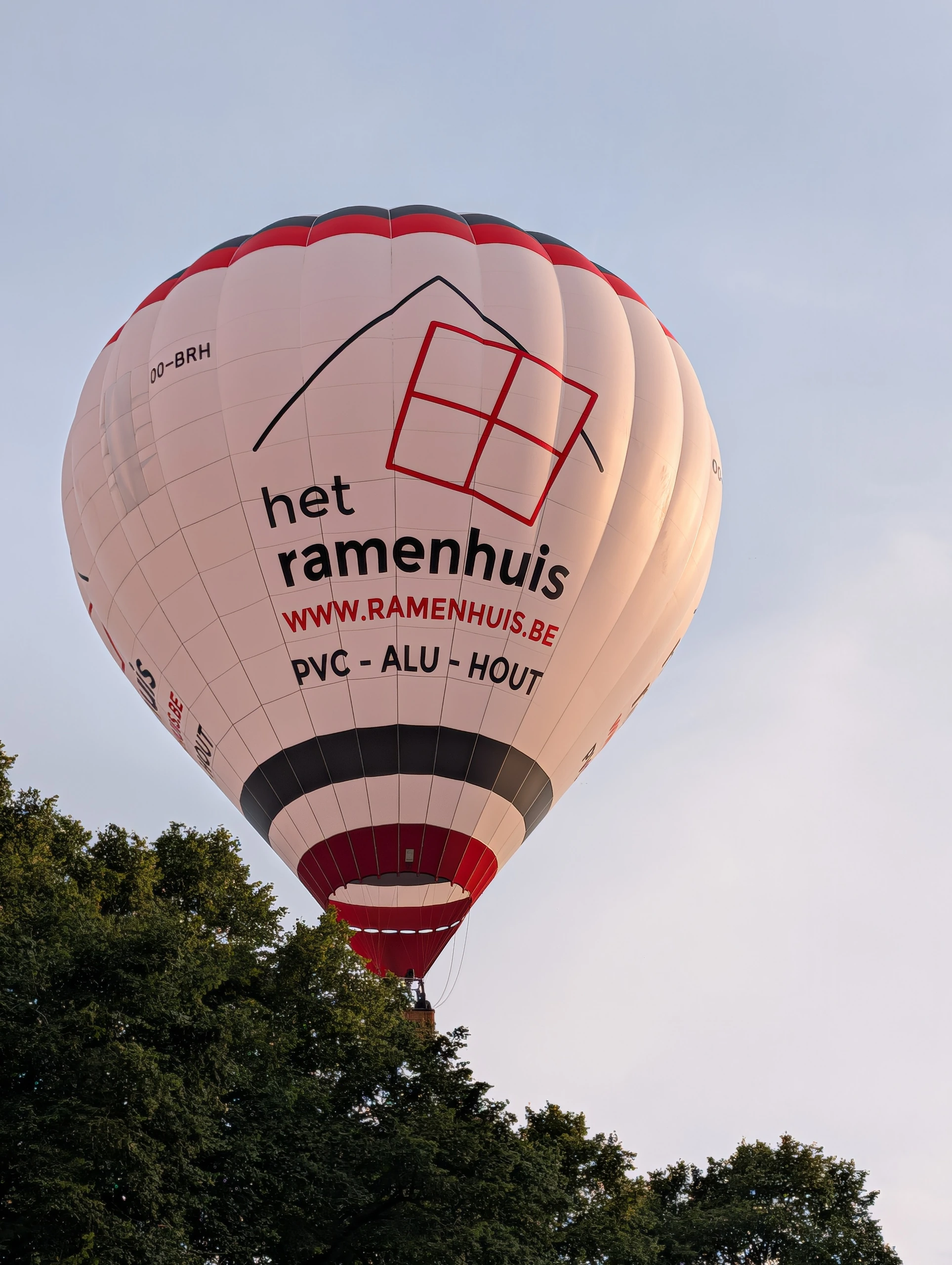
Balloon register: what does OO on a hot air balloon mean?
Every Belgian hot air balloon is in the aircraft register with an OO registration. How to recognise the balloon above your village, and what the letters say.
Read article
The Montgolfier brothers: the first balloon flight
In 1783 the Montgolfier brothers launched the first hot air balloon. This is how ballooning began, and how the same principle still works today.
Read article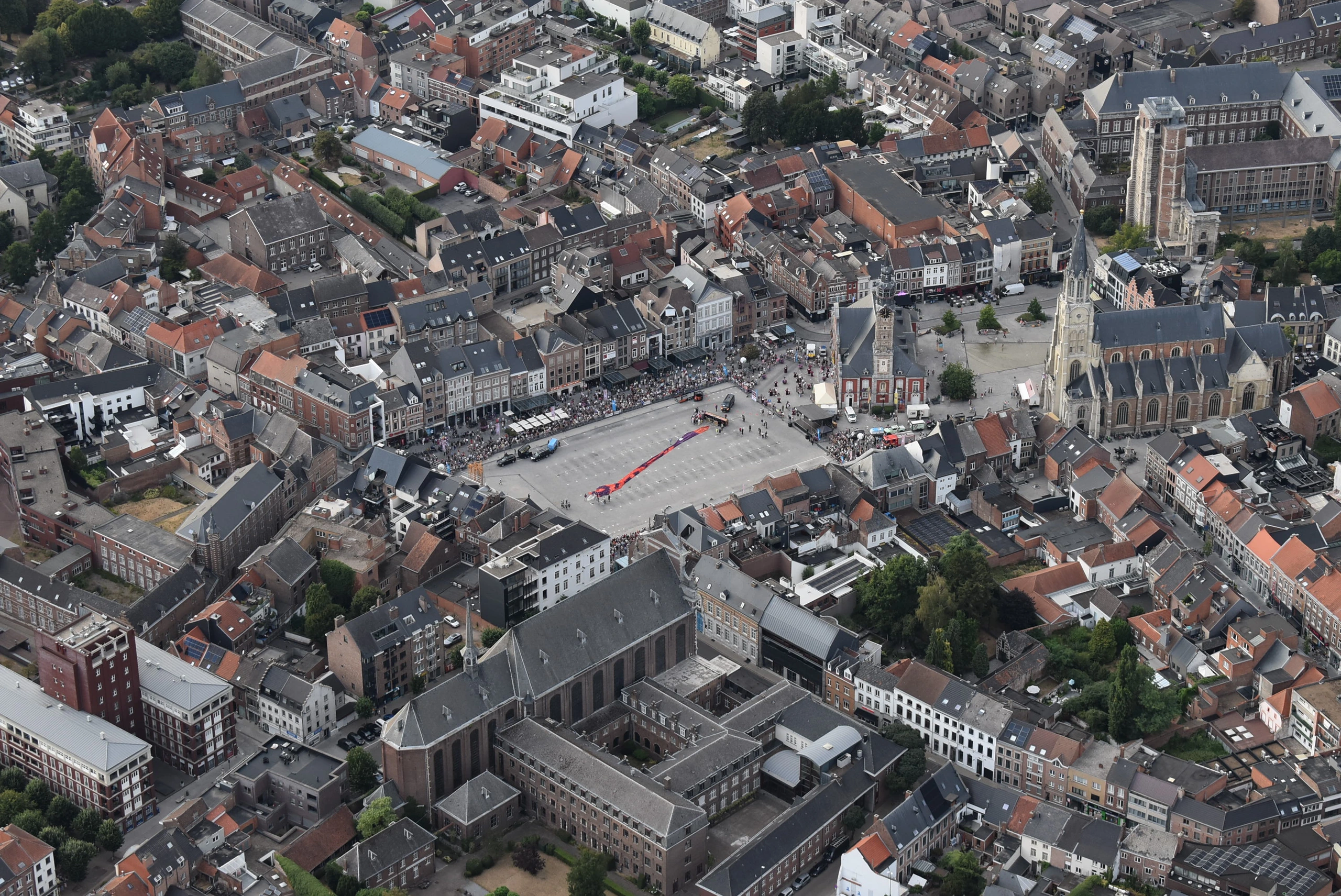
Choosing a hot air balloon experience for anniversary celebrants
Choosing a balloon flight as an anniversary gift? Discover which format suits a wedding anniversary, corporate anniversary, or personal milestone.
Read articleReady to discover Flanders from above?
Book a shared flight or an exclusive private flight in Campine, Limburg or Hageland, with free rescheduling in bad weather.